
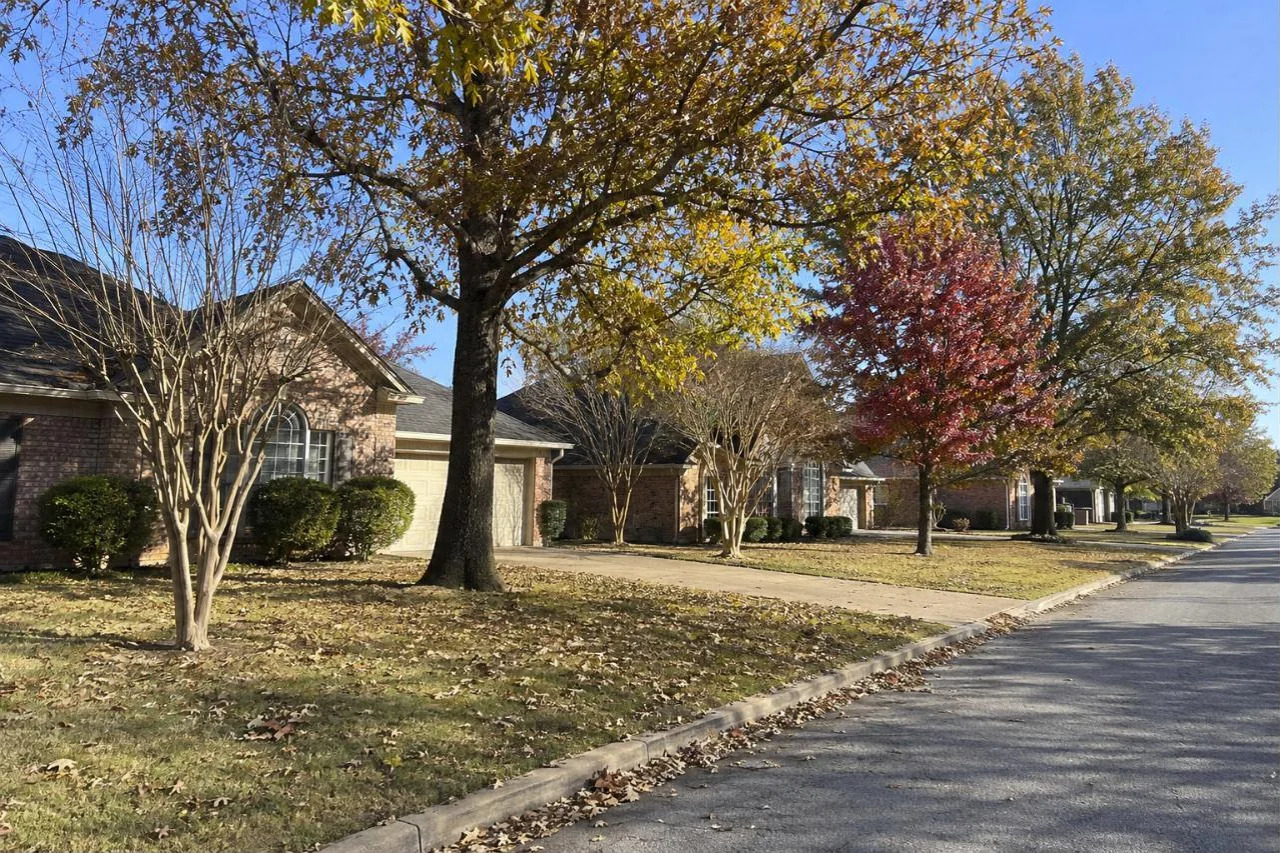
Southaven's two tree lists
Section 13-11(g) of Southaven's zoning code lists the trees it accepts as replacements when its tree rules require replanting, and the ones it won't accept (checked Nov 11, 2026). The lists apply to that replanting, not to what a homeowner may grow in the yard.
| Accepted (Table A, in part) | Not accepted (Table B) |
|---|---|
| Water oak, willow oak, southern red oak, white oak, Shumard oak | Ornamental pear, all species |
| Loblolly pine | Slash pine |
| Southern magnolia, bald cypress, river birch | Native sweetgum |
| Tulip poplar, crapemyrtle, dogwood and others | Sycamore, mimosa, crabapple |
Pecan appears on neither list.
Which trees stand up to wind
UF/IFAS built its wind-resistance ratings for the Southeastern Coastal Plain from studies of trees after hurricanes, a survey of arborists and urban foresters, and published research (checked Nov 11, 2026). DeSoto County is inland and far from the coast, so read these as a guide to how species tend to behave, not as measurements taken here. The authors also stress that no tree is wind-proof, and that soil, care, health and age matter.
| UF/IFAS group | Trees in the group |
|---|---|
| Lowest | Pecan, water oak, southern red oak, Bradford (Callery) pear, tulip poplar, Chinese elm |
| Medium-low | Willow oak, white oak, red maple, hackberry, sycamore, American elm |
| Medium-high | Post oak, sweetgum, river birch, winged elm |
| Highest | Southern magnolia, bald cypress |
The oaks
Water oak
Water oak sits in UF/IFAS's lowest wind group, and MSU Extension lists it among the hosts of hypoxylon canker, the oak disease that strips bark off stressed trees and has no treatment (checked Nov 11, 2026). It's on Southaven's accepted list. Size and lifespan figures weren't confirmed for this site, so none are given here.
Willow oak
The USDA Forest Service's Silvics of North America describes willow oak as reaching "24 to 37 m (80 to 120 ft) in height and commonly 100 cm (39.5 in) in d.b.h.," and "known for its rapid growth and long life." It grows mainly on bottomland soils, its "Roots do not penetrate into the zone of free-standing water," and it is "easily transplanted and used widely in urban areas," "a favored shade tree" (checked Nov 11, 2026). UF/IFAS puts it in the medium-low wind group, a step up from water oak.
Southern red oak and white oak
Southern red oak shares the lowest UF/IFAS group with water oak; white oak rates medium-low. Both are on MSU's list of hypoxylon hosts, and MSU notes that "All oaks are susceptible," especially the red oak group, which includes willow oak (checked Nov 11, 2026).
Pecan
Pecan is native here: Silvics places its range in the lower Mississippi Valley, east to western Mississippi and western Tennessee. MSU Extension says "Pecan trees eventually get very large," recommends planting them 50 to 75 feet apart and away from buildings, and notes roots can reach 6 to 10 feet down. It's in UF/IFAS's lowest wind group, and the 1994 ice storm destroyed a quarter of Mississippi's pecan crop, the NWS office in Jackson reports (all checked Nov 11, 2026). The pecan guide covers it in depth.
Bradford pear
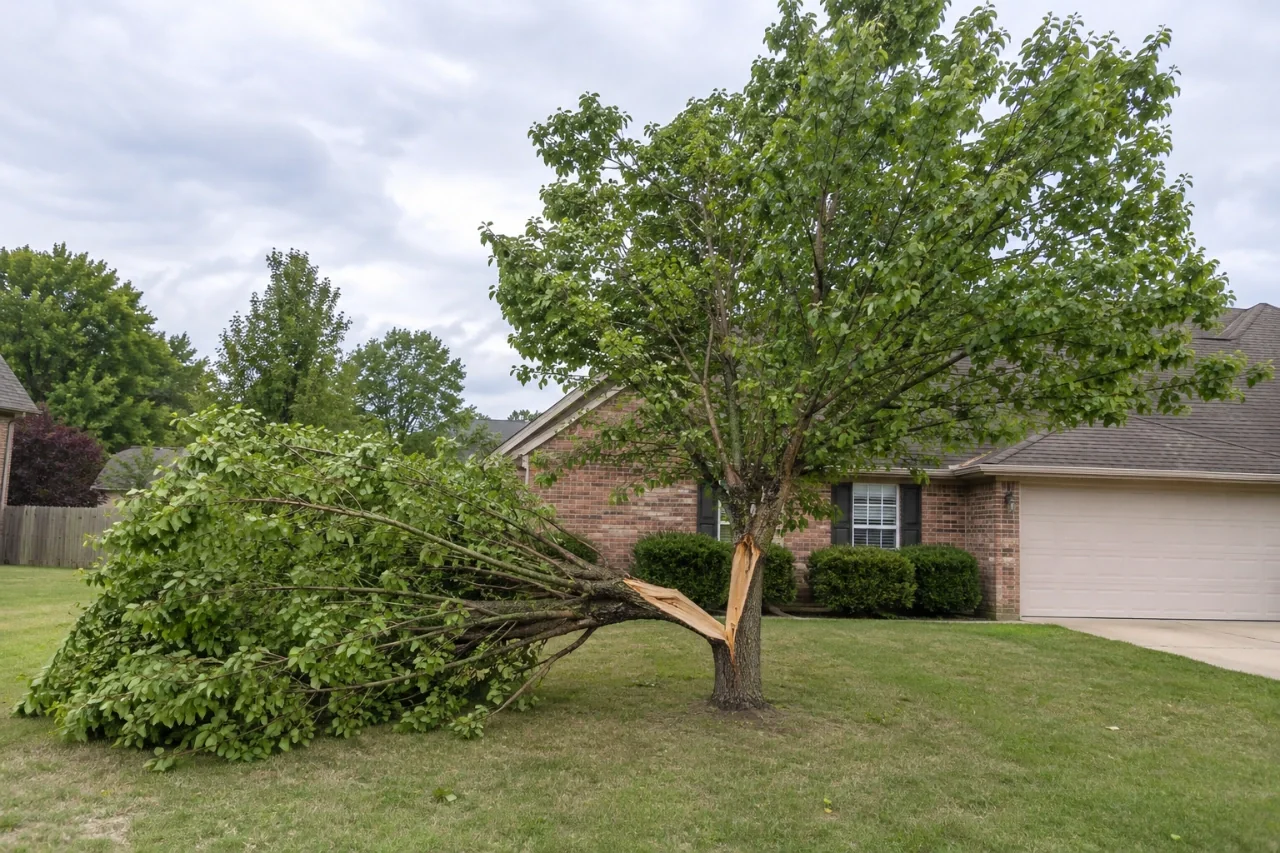
Bradford is a cultivar of the Callery pear, and MSU Extension's guide to yard trees puts it on the list of non-native species to avoid, for "Weak wood susceptible to cracks, branch breakage, and stem splitting during storms." Another MSU publication explains that 'Bradford' trees grow close, upright branches that often split in strong winds, and that escaped Callery pears now grow "over much of the state in open habitats" and are "particularly troublesome near metropolitan areas" (checked Nov 11, 2026).
Mississippi doesn't ban Callery pear, but MSU Extension lists it among yard trees to avoid. MSU's publication says it isn't regulated as a noxious weed in the state, and the Mississippi Forestry Commission's invasive plants page lists Bradford pear alongside Chinese tallow and privet. Southaven's code won't accept any ornamental pear as a replacement tree.
Sweetgum, red maple, magnolia and cypress
- Sweetgum rates medium-high for wind with UF/IFAS, but Southaven's code doesn't accept native sweetgum as a replacement tree, and MSU lists sweetgum among the hosts of bacterial leaf scorch (checked Nov 11, 2026).
- Red maple "Grows fast (up to 90 feet); tolerates shade and sun and a wide range of soils," according to MSU Extension. UF/IFAS rates it medium-low.
- Southern magnolia and bald cypress are in UF/IFAS's highest wind group, and both are on Southaven's accepted list.
- River birch rates medium-high and is also on the accepted list.
Loblolly pine
Loblolly pine is on Southaven's accepted list; slash pine is not. UF/IFAS's rating for loblolly couldn't be confirmed for this site. Pines are the trees bark beetles go after: MSU Extension says Ips beetles are "of special concern for drought-stressed trees," and after the 2023 drought the Mississippi Forestry Commission estimated "over 12,500,000 dead trees" across the area of the state it surveyed (checked Nov 12, 2026). Ice hurts them too. After Winter Storm Fern in January 2026, MSU's forestry newsletter described branch loss, bent and broken stems and uprooting in pines across north Mississippi, worst in recently thinned stands 15 to 28 years old. The dead or leaning trees guide lists what to look for.
The loess underneath
A Mississippi State University (MAFES) guide describes the Upper Thick Loess of northwestern Mississippi, the "Brown Loam area," as wind-blown material "usually greater than four feet thick," with soils such as Memphis, Loring, Grenada, Calloway and Henry, and "Many soils commonly contain a fragipan or restrictive layer in the subsoil" (checked Nov 11, 2026). USDA's descriptions fill in the rest:
- Memphis: "very deep, moderately permeable, well drained soils that formed in loess deposits more than 48 inches."
- Loring: "moderately well drained soils with a fragipan"; "Depth to the fragipan ranges from 14 to 35 inches." Its type location is in Shelby County, Tennessee, next door.
- Grenada: "a fragipan that perches water during wet seasons in late winter and early in spring."
Which of those soils are mapped under a given DeSoto County street wasn't confirmed for this site. The general point holds, though: on fragipan soils, roots stay shallower, and the soil above the pan can stay wet in late winter and spring, the season of ice storms and spring wind.
Pests and diseases to know
- Bark beetles (southern pine beetle and Ips) in pines. The state's 2024 forest health report found elevated southern pine beetle activity mainly in central and northeastern Mississippi and elevated Ips activity statewide; DeSoto County isn't named.
- Hypoxylon canker in oaks, especially after drought. No treatment.
- Bacterial leaf scorch in oak, elm, sycamore, maple, sweetgum and pecan. No cure.
- Emerald ash borer, first found in Mississippi in 2025, in Issaquena County. Not confirmed in DeSoto County in anything read for this site.
- Pecan pests: scab, twig girdlers, webworms and more, covered on the pecan page.
All from MSU Extension, the Mississippi Forestry Commission and the USDA Forest Service, checked Nov 11, 2026.
Tree questions
Is it legal to plant a Bradford pear in Mississippi?
Yes. MSU Extension says Callery pear isn't regulated as a noxious weed in Mississippi, but it lists the tree among yard trees to avoid, and Southaven won't accept ornamental pears as replacement trees (checked Nov 11, 2026).
Which trees hold up best in wind?
Of the trees common here, southern magnolia and bald cypress rank highest in UF/IFAS's hurricane-based ratings, with post oak, sweetgum and river birch next. No tree is wind-proof; the UF authors note that soil, care, health and age matter too.
Can a pecan count as a replacement tree in Southaven?
Pecan isn't on either of the code's lists, accepted or not accepted (checked Nov 11, 2026). Replacement planting only comes up on land outside the exemptions, so if the city asks you to replant, ask its planning office which trees qualify.
The site sells, plants and diagnoses nothing. A call or form from here is handed to one independent DeSoto County contractor.
Sources
- City of Southaven zoning code, Sec. 13-11(g), Tables A and B, on Municode (Supp. No. 70, read Nov 12, 2026). Checked Nov 11, 2026.
- UF/IFAS, Wind and Trees: Lessons Learned from Hurricanes (FR173). Checked Nov 11, 2026.
- USDA Forest Service, Silvics of North America, Willow Oak and Pecan. Checked Nov 11, 2026.
- MSU Extension, Non-native and Native Yard Trees in Mississippi (P4025), Callery Pear (P3316), Hypoxylon Dieback of Oaks, Bacterial Leaf Scorch, Pecans in the Home Landscape, bark beetle risk, Emerald ash borer has arrived in state and The Overstory, May 2026. Checked Nov 11, 2026.
- Mississippi Forestry Commission, invasive plants and 2024 Pine Mortality Report; USDA Forest Service and MFC, Forest Health Highlights 2024; NWS Jackson, 1994 ice storm. Checked Nov 11, 2026.
- MAFES, Soil Resource Areas of Mississippi; USDA NRCS, Memphis, Loring and Grenada series. Checked Nov 11, 2026.